June 13, 2026 • Steve Dawson • 9 min reading time • Prices verified June 25, 2026
Tahitian Pearl Pendant Necklaces: Matching Metal, Size, and Overtone to Your Budget
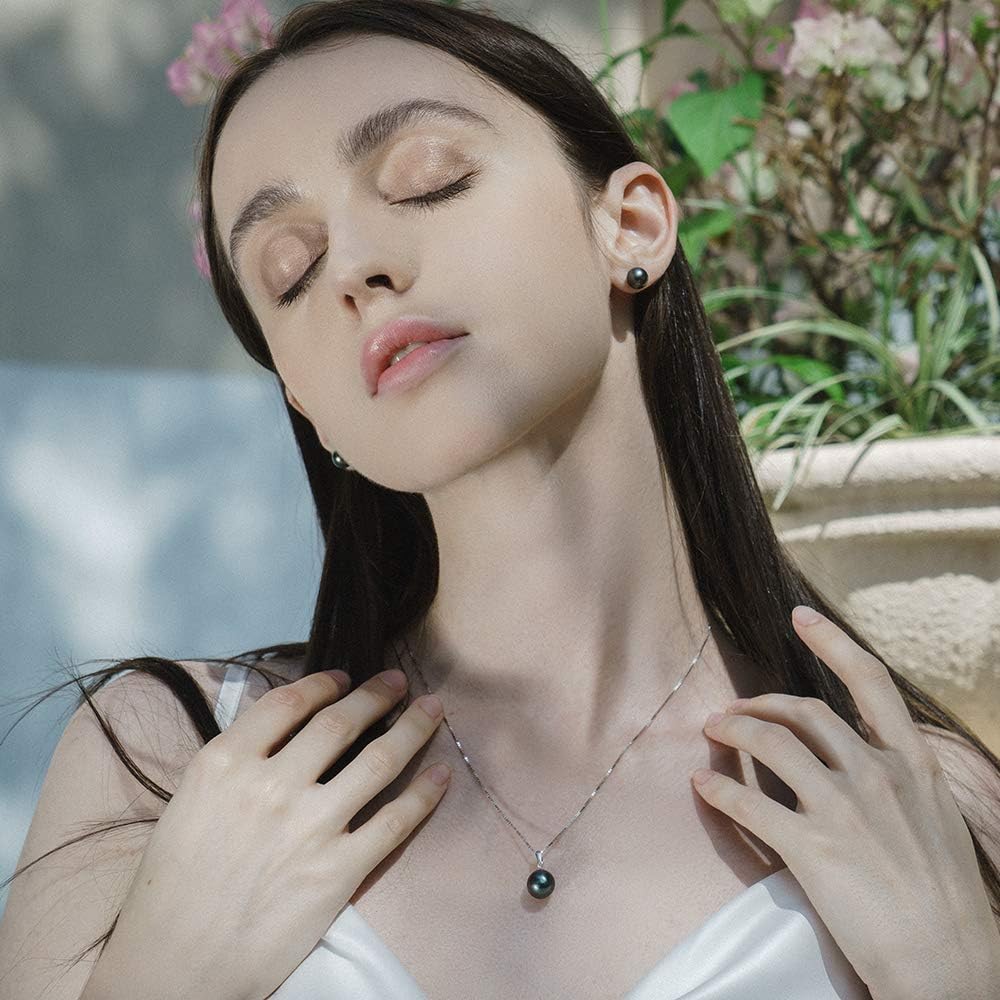
A Tahitian pearl pendant necklace sounds simple: one pearl, one chain, one clasp. In practice, it’s one of the more decision-dense purchases in pearl jewelry, because three variables — the pearl’s size, its overtone (the secondary color you see playing across its surface), and the metal you hang it from — interact in ways that aren’t always obvious from product photos. Tahitian pearls are cultured in the black-lipped oyster Pinctada margaritifera in French Polynesia. They’re the only pearls that grow in naturally dark body colors — ranging from charcoal and silver to deep green, peacock (a mix of green and purple), and aubergine. That natural color variation is what makes them so interesting. It’s also what makes the matching problem genuinely tricky. This guide walks you through the decision frame, shows you the math, and gives you clear if/then rules for the $300–$3,000 range.
Why Size and Overtone Aren’t Independent Decisions
If you’ve been sourcing or buying pearls for more than a few months, you already know that size drives price faster than almost any other factor. But with Tahitian pendants specifically, size and overtone interact in a way that trips up even experienced buyers.
The size reality: Tahitian pearls typically range from 8mm to 18mm, with commercial pendant-grade goods clustering in the 9–13mm window. Per GemSociety.org’s overview of Tahitian pearl value factors, size increments of even half a millimeter carry meaningful price jumps because larger pearls require significantly longer cultivation — often 18 to 24 months in the oyster — and rejection rates climb sharply past 12mm. A clean, well-luster 9mm costs roughly 30–45% less than a comparable 11mm from the same harvest.
The overtone interaction: Overtone is the iridescent secondary color that floats above the pearl’s body color when light hits it correctly. The GIA’s pearl quality overview identifies the most commercially significant Tahitian overtones as peacock (green with pink/purple), green, cherry (pink-red), and silver/blue. Here’s the tricky part: overtone visibility scales with nacre thickness and surface quality, and it also scales with size — larger surfaces give overtone more room to develop. A 9mm pearl with a strong peacock overtone is genuinely rare and commands a premium. A 9mm with a faint or patchy overtone is common. If you’re working with a budget that points you toward 9–10mm, prioritize overtone quality aggressively. You’re paying for what makes Tahitians different in the first place.
By the numbers — approximate mid-2026 pendant-grade pricing by size and quality tier:
| Size | AA surface, moderate luster | AAA surface, strong overtone |
|---|---|---|
| 9mm | $180–$320 (loose) | $420–$700 (loose) |
| 11mm | $320–$550 (loose) | $750–$1,400 (loose) |
| 13mm | $600–$950 (loose) | $1,600–$2,800 (loose) |
These figures reflect loose pearl pricing as tracked by retailers including Pearl Paradise and The Pearl Source blog as of early 2026, before setting costs. Mounted pendant retail adds $80–$400 depending on metal and setting complexity.
Metal Matching: This Is Where Most Buyers Leave Money on the Table
Metal choice for a Tahitian pendant isn’t purely aesthetic — it’s a value allocation decision. Here’s how to think about it at each budget band.
White Gold and Platinum (the safe default, and its cost)
18k white gold and platinum are the conventional pairing for Tahitian pearls, and they work for a straightforward reason: the neutral, cool tone of white metal doesn’t compete with the pearl’s body color. It recedes and lets the overtone do its job. Pearl Paradise’s editorial notes on Tahitian pendants consistently recommend white metal settings for pearls with peacock or green overtones, because yellow gold can pull the eye toward warmth and partially mask the blue-green iridescence.
The cost reality: a simple four-prong 18k white gold bail and setting adds $150–$350 to your retail price over a sterling-silver equivalent. Platinum adds more — often $200–$500 over 18k white gold, depending on weight and maker. If your total pendant budget is $400 or under, spending $250 on the metal leaves $150–$200 for the pearl, which forces you into 9mm AA territory. That’s a defensible choice for a gift, but if luster and overtone are your priority — and they should be, for Tahitians — you’re better served by a sterling silver or vermeil setting that keeps your pearl budget intact.
The practitioner rule: If the pearl budget would drop below $350 to afford 18k white gold, buy sterling silver now. Upgrade the setting later. The pearl is the asset; the metal is infrastructure.
Yellow Gold (the underrated contrarian play)
Yellow gold — 14k or 18k — reads counterintuitively well against Tahitian pearls with cherry, aubergine, or silver-blue overtones. The warm metal doesn’t fight a cool-toned pearl; it creates contrast that reads as intentional. The American Gem Society’s style guidance for colored pearls supports this framing: complementary contrast is a legitimate design choice, not a mistake.
The value angle: 14k yellow gold settings are often 20–30% less expensive than 18k white gold equivalents from the same maker. If your pearl has a strong cherry overtone and you’re in the $600–$1,000 total range, 14k yellow gold lets you spend more on the pearl itself.
Rose Gold (proceed carefully)
Rose gold has a narrow sweet spot with Tahitians. It flatters silver-body pearls with pink or cherry overtones. Against green-peacock Tahitians, the pink copper tones in rose gold create visual noise — reviewers across fine jewelry forums consistently flag this combination as muddying the overtone rather than enhancing it. If a retailer is pushing rose gold settings for all Tahitian overtones equally, treat that as a signal they’re selling settings, not pearls.
Sterling Silver and Vermeil (the honest budget option)
For the $250–$500 total pendant range, sterling silver is the right answer. Full stop. A well-made sterling setting with rhodium plating is durable, bright, and won’t compete with the pearl. The Pearl Source’s buying guide notes that most entry Tahitian pendants sold online in this range arrive in sterling silver, and the pearl quality at that price point benefits meaningfully from not having setting costs absorb the budget. Vermeil (gold-plated sterling) offers a gold look with similar economics.
Reading Overtone at Point of Purchase — Without Being Fooled by Photography
This is the gap between knowing the theory and closing the right deal. Product photography of Tahitian pearls is systematically misleading. Studio lighting is engineered to show overtone at its best angle, in ideal conditions. You are rarely buying in those conditions, and the person receiving the piece will wear it in ambient light.
The GIA’s pearl grading documentation distinguishes between orient (the iridescent play of color that moves across the surface) and body color (the underlying hue). Strong orient is what makes a peacock Tahitian special. Weak orient with a dark body color just looks like a black bead.
What to ask for, or look for, before buying:
-
Multiple lighting photos. A pearl with genuine peacock or green overtone should show iridescence in overhead fluorescent light, not just directional studio spotlighting. Ask the seller for a photo under a desk lamp or natural window light. If the overtone disappears, it’s faint.
-
Video over stills. Orient moves. A 10-second video clip turning the pearl under a single light source tells you more than five still photos. Retailers like Pearl Paradise have normalized video documentation for this reason; it’s a reasonable standard to expect.
-
Luster distinction. Per GemSociety.org’s value factor breakdown, luster (the sharpness of reflections on the pearl’s surface) is graded separately from overtone. A high-luster pearl reflects a clear image of a light source. A low-luster pearl shows a diffuse glow. Strong luster is a prerequisite for overtone to read at all — you need a sharp reflective surface for iridescence to organize itself. Don’t trade luster for size.
The Decision Frame by Budget
You’ve been moving toward a pending decision. Here’s the if/then structure:
Under $400 total: Choose a 9–9.5mm pearl with the strongest peacock or green overtone you can find in AA or better surface grade. Set it in sterling silver or rhodium-plated sterling. Don’t compromise overtone quality to get a 10mm — the overtone is the purchase justification for a Tahitian. This tier serves well as a gift or entry collector piece.
$400–$900 total: This range opens up 10–11mm meaningfully. Prioritize: (1) luster first, (2) overtone second, (3) surface grade third, (4) size last. A 10mm AAA with strong peacock in 14k white gold or 14k yellow gold (depending on overtone) is the value peak of the Tahitian pendant market. The Pearl Source and Pearl Paradise both carry pendant-complete options in this range where the setting-to-pearl cost ratio is sensible.
$900–$3,000 total: At this level, you’re buying into the 11–13mm range and can reasonably expect AAA or better surface quality with verified overtone documentation. Insist on seller-provided video, and consider whether the piece comes with any grading documentation. GIA does not issue individual pearl reports for most pendant-grade goods, but reputable dealers will provide their own grading documentation and have standing relationships with trade graders. Kamoka Pearl, operating directly from their French Polynesian farm, publishes detailed provenance and harvest documentation — worth knowing if farm-to-pendant traceability matters to you. At this budget, the setting should be 18k white or yellow gold to match the pearl’s value tier.
One Mistake Worth Naming Directly
The most common mid-tier mistake in this category: buying a 12mm pearl with weak luster and poor overtone because the size looks impressive in photos, then setting it in an expensive metal to compensate. Size without luster is a stone, not a Tahitian pearl. The investment logic runs in the other direction — a smaller pearl with exceptional orient is both more beautiful to wear and more defensible as a value hold. The American Gem Society’s general pearl education materials reinforce this hierarchy: luster and surface quality determine longevity of beauty; size determines bragging rights. Know which you’re actually buying for.
If you’re currently sitting on a sourcing decision or a retail purchase under consideration, run this filter: overtone visible in ambient light? Luster sharp enough to reflect a clear image? Metal budget proportional to pearl budget? If all three check out, the size almost takes care of itself.