June 4, 2026 • Steve Dawson • 8 min reading time • Prices verified June 25, 2026
Tahitian Pearl Necklace Listings Audited: What 'AAAA+' and 'South Sea' Actually Mean on Amazon
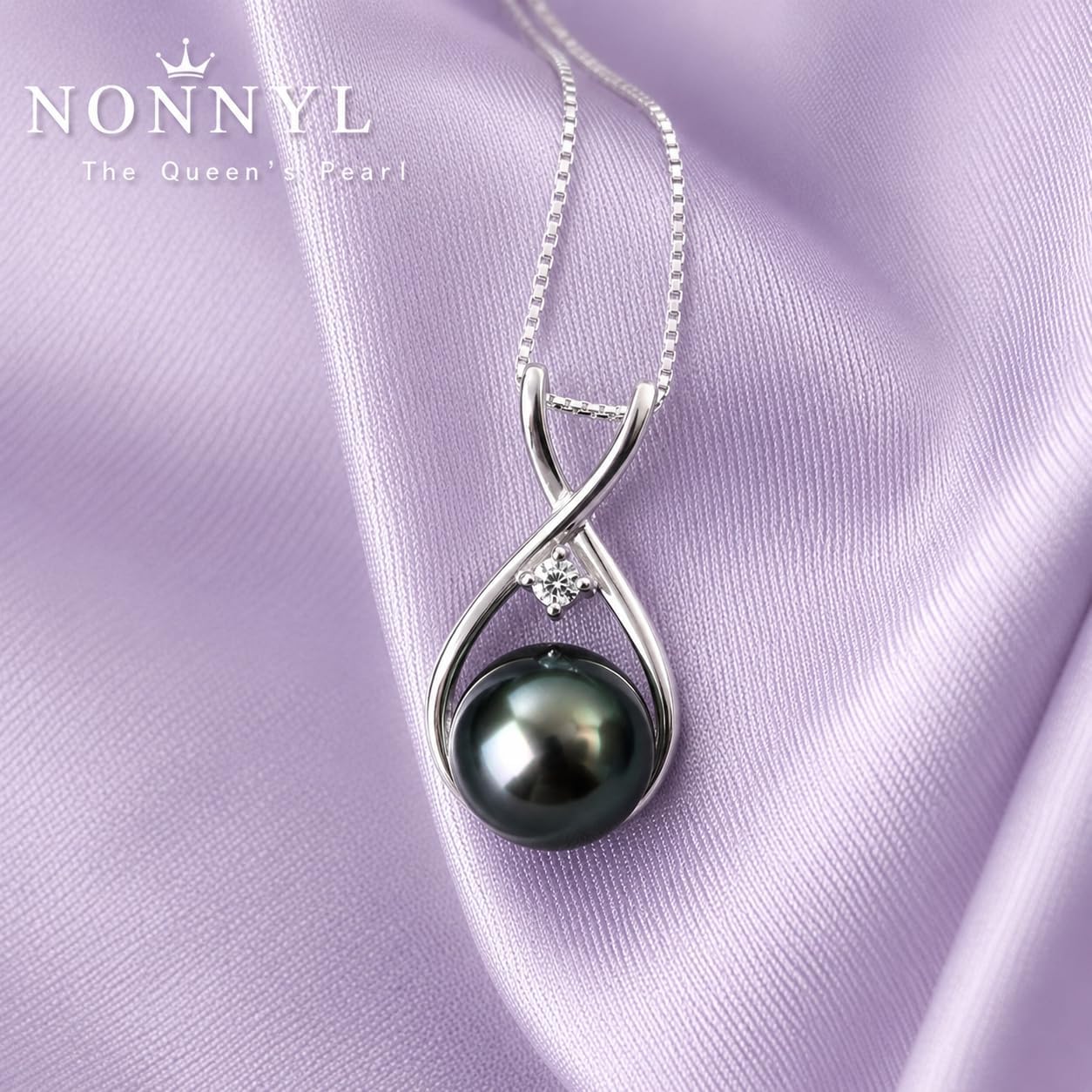
If you’ve started researching Tahitian pearl necklaces online, you’ve probably landed on an Amazon listing promising “AAAA+ Genuine Tahitian South Sea Pearls” at a price that seems almost too good. Tahitian pearls — the naturally dark, iridescent cultured pearls grown by the black-lipped oyster Pincteria margaritifera in French Polynesia — typically retail in finished strands from around $400 to well over $5,000 depending on size, luster, and surface quality. “Cultured” simply means a technician implanted a nucleus bead into the oyster to prompt pearl formation; the pearl is still real and still takes years to grow. The grading labels slapped on marketplace listings, though? Those are a different matter entirely. This article audits the most common marketing terms you’ll encounter — grades like “AAAA+,” origin claims like “South Sea,” and quality descriptors like “gem grade” — and explains what they actually signal (or fail to signal) so you can make a confident, informed decision with real money on the table.
| EDITOR'S PICK[The Pearl Source 14K Gold 10-11](https://www.amazon.com/dp/B00E1OFP1A?tag=greenflower20-20)… | Mid-tier[NONNYL Birthday Gifts for Women](https://www.amazon.com/dp/B09DD7C9BK?tag=greenflower20-20)… | Budget pick[YAMI Tahitian Black Pearl Neckl](https://www.amazon.com/dp/B0CH1466QD?tag=greenflower20-20)… | |
|---|---|---|---|
| Pearl Shape | Drop-Shape | — | Near-Round |
| Pearl Size | 10-11mm | — | — |
| Clasp Material | 14K Gold | — | 925 Silver |
| Type | South Sea | Tahitian | Tahitian |
| Length | — | — | 18+2IN |
| Price | $553.00 | $218.97 | $74.23 |
| See on Amazon → | See on Amazon → | See on Amazon → |
The Grade Label Problem: Why ‘AAAA+’ Is Meaningless on Its Own
Let’s start with the most important fact in this entire article: there is no universal, standardized pearl grading system enforced across the industry.
The GIA (Gemological Institute of America), in its Pearl Description and Grading reference, uses a narrative quality-factor framework that evaluates luster, surface, nacre quality, shape, color, and matching — but it does not issue a simple letter or plus-sign grade that maps to a retail listing. The A–AAAA scale used widely in retail is an industry convention, not a regulated standard. As Pearl Guide’s grading systems overview explains, different retailers define their “AAA” differently, and no external body certifies that a listing labeled “AAAA” actually meets any particular benchmark.
What that means in practice: a seller on any open marketplace can self-assign “AAAA+” to any pearl they sell. There is no auditor checking. There is no penalty for inflating the grade. The term is, at best, a seller’s internal quality tier — and at worst, pure marketing fiction.
The decision frame here is simple: treat any A-grade label from an unverified marketplace seller as a starting point for questions, not a quality guarantee. The real signal is what the listing tells you about the specific quality factors — luster, surface coverage, nacre thickness, and size. If those details are absent or vague, the grade label is doing no useful work.
‘South Sea’ vs. ‘Tahitian’: These Are Not the Same Thing
This is where listings get genuinely deceptive, and it costs buyers real money.
“South Sea pearls” properly refers to pearls cultured in the South Pacific — primarily Australia, Indonesia, and the Philippines — from the Pincteria maxima oyster. They are typically white, silver, or gold, and range from 9mm to 20mm. They are expensive: a quality South Sea strand from a reputable dealer routinely runs $1,500 to $15,000+.
Tahitian pearls come from a different oyster (Pincteria margaritifera) cultured primarily in French Polynesia. They are naturally dark — charcoal, green, peacock, aubergine — and typically range from 8mm to 14mm. A quality Tahitian strand from a specialist retailer like Pearl Paradise or Kamoka runs roughly $500 to $5,000+ depending on size and quality tier.
The audit finding: Numerous Amazon listings label Tahitian pearls as “Tahitian South Sea pearls” or simply “South Sea pearls” interchangeably. The American Gem Society’s pearl buying guide is explicit that these are distinct gem varieties. Conflating them is either careless or deliberate — either way, it obscures origin and undermines comparison shopping.
If a listing says “South Sea” but shows dark pearls in the photography, you are almost certainly looking at Tahitian pearls being marketed with a more prestigious-sounding label. That’s not a neutral error. South Sea pearls command higher prices precisely because of their origin and oyster species. Calling Tahitian pearls “South Sea” implies a value that isn’t there.
Decision rule: If the pearls in the photo are dark (black, grey, green, peacock), they are Tahitian. If a listing calls them “South Sea,” treat that claim as unverified until you see documentation of origin from the seller or a third-party certificate.
By the Numbers: What Legitimate Quality Markers Actually Look Like
| What You See in a Listing | What It Actually Tells You |
|---|---|
| ”AAAA+” grade, no other detail | Self-assigned; no external verification; ignore as a standalone signal |
| Size stated (e.g., “9–10mm”) | Useful — size is measurable and directly affects price |
| ”South Sea” label on dark pearls | Likely mislabeled Tahitian; origin claim unverified |
| ”Nacre thickness: 2mm+“ | Meaningful if verifiable — thicker nacre = better luster longevity |
| GIA or CIBJO certificate referenced | Strong positive signal — third-party grading |
| ”Gem grade” / “AAA gem quality” | Marketing descriptor; no standard definition |
Reading Luster and Surface Claims Without Holding the Pearl
Luster is the single most important quality factor in a Tahitian pearl. The Gem Society’s pearl value and pricing overview describes luster as the combination of surface reflection sharpness and the depth of glow from beneath the nacre — what collectors call “orient.” A high-luster Tahitian pearl looks almost mirror-bright; a low-luster pearl looks chalky or waxy by comparison.
The problem with marketplace listings is that luster is almost impossible to convey honestly in a product photo. Studio lighting, white backgrounds, and post-processing can make a mediocre-luster pearl look spectacular. This is not hypothetical: The Pearl Source’s blog on quality factors notes explicitly that photography conditions are one of the most common sources of buyer disappointment when pearls arrive versus what was expected.
What to look for in listing photos as a proxy for luster:
- Can you see a clear, sharp reflection of the studio light on the pearl surface? (Good sign)
- Do the pearls look uniformly flat and bright — like they’ve been photographed under diffuse, shadowless light specifically to hide surface texture? (Caution signal)
- Is there depth behind the surface reflection, or does the “glow” look like it’s sitting on top? (Hard to judge from a photo, but multiple angles help)
Surface quality — the presence of pits, rings, bumps, or spots — matters for price but is harder to evaluate at distance. Legitimate retailers will state surface coverage in percentage terms (e.g., “less than 10% surface blemish coverage”) or use descriptors like “lightly spotted” or “clean.” Listings that simply say “flawless” or “clean” with no further specification are using terms that have no agreed meaning outside a verified grading report.
The Certification Gap and What It Costs You
Here’s the practical math that most marketplace buyers skip.
A Tahitian strand listed at $180–$300 on an open marketplace with “AAAA+” marketing and no third-party certification cannot be the same quality as a $1,200–$2,500 strand from a specialist retailer with documented provenance and consistent quality standards. The cost of goods — the pearl itself, the harvest, the matching, the stringing — simply doesn’t support it at that price point.
The GIA’s pearl description framework identifies nacre thickness as a durability and luster predictor. Thin nacre (common in fast-harvest commercial production) produces pearls that lose luster within a few years of wear as the nacre layer wears through to the nucleus bead underneath. Marketplace listings rarely disclose nacre thickness because, frankly, it’s rarely favorable in the price tier where the competition is.
Brands like Kamoka, which operates its own farm in Fakarava, French Polynesia, and Pearl Paradise, which publishes detailed quality documentation for each strand, are operating in a different verification ecosystem than an anonymous marketplace seller. That premium isn’t just for the name — it’s for traceability, which is what makes the grade claim actually mean something.
If X, then Y decision rules for this purchase tier:
- If the listing price is under $400 for a full Tahitian strand with AAAA labeling: Assume the grade is self-assigned and unverified. The pearls may still be attractive for the price — but price them as decorative jewelry, not investment-grade gems.
- If you need documentation for resale or estate purposes: Only a GIA report or equivalent third-party certificate (CIBJO standards apply in many international markets) provides defensible provenance. Neither A-grade labels nor Amazon seller assurances qualify.
- If the size is listed as 10mm+ at under $600: Either the pearls are off-round/baroque (where size overstates the visual impression), surface quality is significant, or luster is low. All three are legitimate tradeoffs — but they need to be disclosed, not buried in marketing language.
- If you’re sourcing for a studio or boutique resale context: The American Gem Society’s buying guide recommends working with suppliers who can provide written quality documentation per parcel. Marketplace sourcing at volume, without that documentation, creates liability downstream when clients ask questions your supplier can’t answer.
How to Audit a Listing in Under Five Minutes
Before clicking “Add to Cart” on any Tahitian pearl listing, run this quick check:
-
Strip the grade label. Mentally delete “AAAA+” or “gem grade.” What quality information remains? If the answer is “not much,” that’s your data.
-
Check the origin claim against the pearl color. Dark pearls = Tahitian. If the listing says “South Sea” and the pearls are dark, the origin claim is at minimum imprecise.
-
Look for size, nacre thickness, and surface coverage stated as specific numbers. Vague descriptors (“beautiful,” “lustrous,” “flawless”) are not substitutes for measurable specifications.
-
Search the seller name + “pearl certificate” or “pearl documentation.” Reputable sellers at the $500+ price point should be able to provide, or at least describe, how their quality tiers are defined.
-
Compare against a named specialist retailer at the same size and price. Pearl Paradise, The Pearl Source, and Kamoka all publish strand pricing by size and quality tier. If the marketplace listing is 60–70% cheaper than a comparable specialist strand with full documentation, ask yourself what’s been removed from the value equation to reach that price.
The pearls you’re buying are real. The grading language often isn’t. Those are two different problems — and knowing the difference is what separates a purchase you’ll regret from one you’ll wear for decades.