May 4, 2026 • Steve Dawson • 9 min reading time • Prices verified June 25, 2026
Golden and White South Sea Pearl Pendants: A Cost-Per-Millimeter Case for the $550–$1,800 Tier
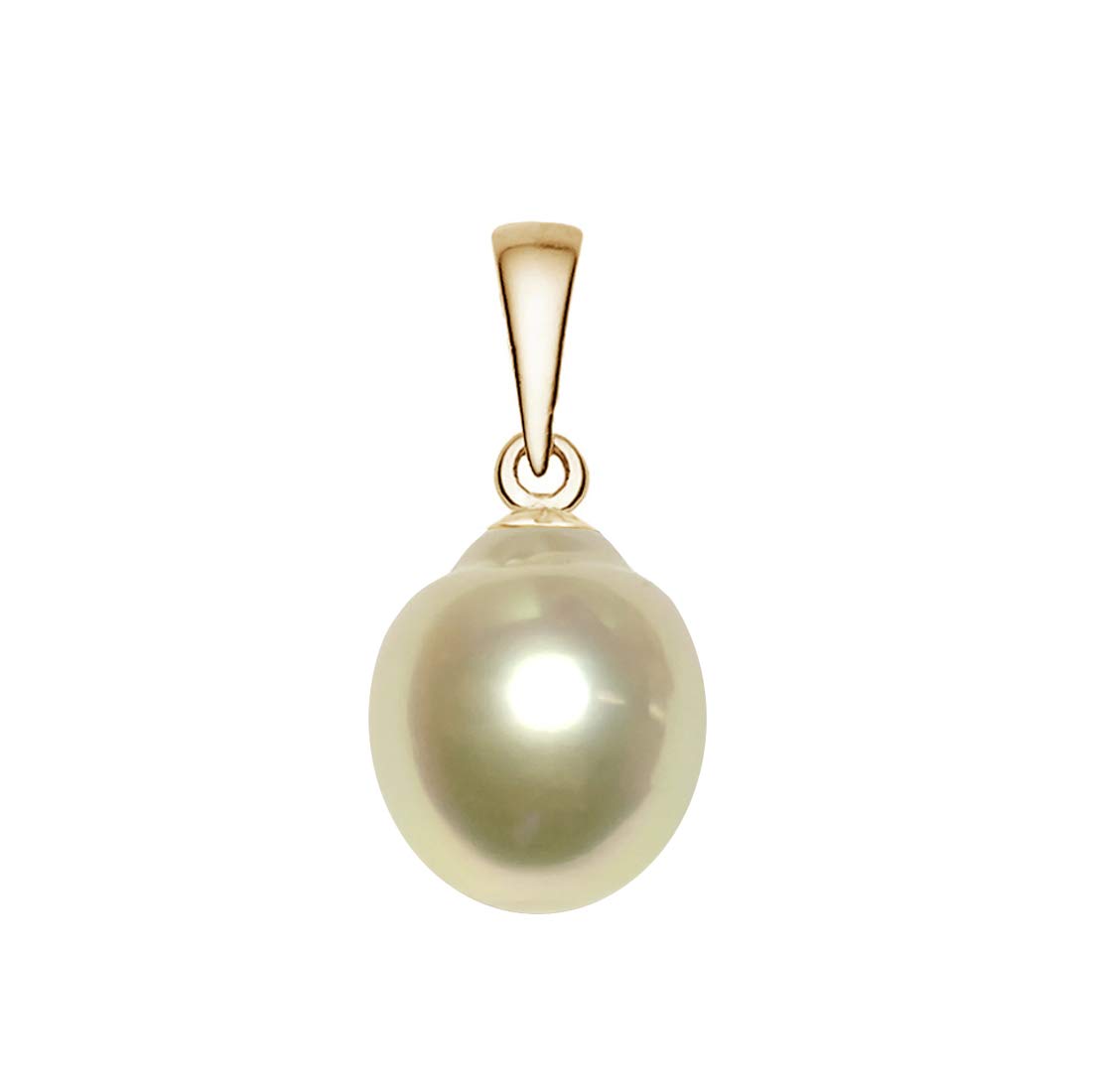
If you’re looking at a South Sea pearl pendant for the first time, here’s the short version: South Sea pearls are cultured inside large oysters (Pinctada maxima) in the warm coastal waters of Australia, the Philippines, and Indonesia. They grow slowly — typically two to four years per pearl — which is why they come out significantly larger than the Akoya pearls most people picture when they hear “pearl necklace.” A South Sea pearl pendant is simply one of those larger pearls, mounted in a metal setting and worn at the neckline. They come in two main color families: white (sometimes with silver or cream overtones) and golden, which ranges from pale champagne to a deep, saturated 24-karat gold hue. The $550–$1,800 price window is where real quality lives without requiring a collector’s budget. This article breaks down exactly what you’re paying for at each price point — and how to tell whether a specific pendant is priced fairly or padded with brand markup.
| EDITOR'S PICKEdwina Gold 12-13mm AAA Quality… | Mid-tier[The Pearl Source 14K Gold Round…](https://www.amazon.com/dp/B00LCD85YW?tag=greenflower20-20) | Budget pick[PremiumPearl Golden South Sea C…](https://www.amazon.com/dp/B00P920U3Q?tag=greenflower20-20) | |
|---|---|---|---|
| Pearl Size | 12-13mm | 10.0-10.5mm | 10-11mm |
| Metal Type | 14K Yellow Gold | 14K Gold | 14K Yellow Gold |
| Chain Included | — | 16" Choker Length | — |
| Quality Grade | AAA | — | AAAA |
| Color | — | Golden | Golden |
| Price | $1,809.00 | $550.00 | $400.00 |
| See on Amazon → | See on Amazon → | See on Amazon → |
Why This Price Tier Is Genuinely Different From What’s Below It
Spend less than $500 on a South Sea pendant and you’re almost certainly looking at one of three things: a small pearl (under 10mm) with compromised luster, a piece from a vendor who isn’t transparent about nacre thickness (nacre is the layered, crystalline material that forms the pearl — the thicker it is, the deeper and more durable the luster), or a pearl that graded out of a strand and got remounted as a solitaire pendant.
The $550–$1,800 range is where size, nacre quality, and setting metal all start pulling in the same direction. Here’s a practical breakdown of what’s typically available at each sub-tier, based on published pricing from major specialist retailers as of mid-2026:
By the numbers — representative South Sea pendant pricing, May 2026:
| Size | Color | Luster Grade | Approximate Retail Range |
|---|---|---|---|
| 10–11mm | White/Silver | AA | $550–$850 |
| 11–12mm | White/Cream | AA–AAA | $800–$1,200 |
| 12–13mm | Golden (light) | AA+ | $900–$1,400 |
| 13–14mm | Golden (deep/saturated) | AAA | $1,300–$1,800 |
Sources: The Pearl Source blog South Sea buying guide; Pearl Paradise published retail pricing.
The cost-per-millimeter math is not linear. Going from a 10mm to a 12mm pearl does not simply add 20% to the price — it can double it, because nacre thickness increases with pearl size, culturing duration lengthens, and rejection rates at harvest climb steeply. A 13mm round South Sea golden pearl in AAA luster is exponentially rarer than an 11mm AA white. That rarity is real, not manufactured.
The Luster and Surface Variables That Actually Drive Price
This is where practitioners with six to twelve months of experience often still underweight a key variable: luster grade matters more than size in the $550–$1,800 tier.
Luster, in plain terms, is how sharply and deeply a pearl reflects light. A high-luster South Sea pearl shows a near-mirror reflection — you can see the outline of a window or a light source in the surface. A low-luster pearl looks chalky, milky, or flat. The difference is visible to the naked eye and is entirely a function of nacre crystalline structure, which is set during the culturing process and cannot be improved after harvest.
The GIA’s pearl grading research (published on gia.edu) describes luster on a four-point scale: Excellent, Good, Fair, and Poor. Most commercial vendors translate this into their own AAA–A systems, which are not standardized across the industry — a critical point. What one retailer calls AAA another may call AA+. This is not fraud; it reflects the absence of a universal third-party grading authority for cultured pearl pendants equivalent to GIA’s diamond grading reports.
What this means for your purchase decision:
When comparing two pendants at the same price from different vendors, you cannot trust the letter grade alone. You need to look at luster description language, ask whether the vendor provides video in natural light (not studio light, which flatters everything), and — if purchasing above $1,200 — consider requesting documentation of nacre thickness if the vendor provides it.
The American Gem Society’s pearl quality guidance (americangemsociety.org) recommends a minimum nacre thickness of 0.4mm for commercial pearls, but for South Sea solitaire pendants in this price tier, reputable retailers typically offer nacre starting at 2mm and going to 4mm or more. Nacre thickness in that range is a meaningful durability signal, not just a marketing number.
Surface quality is the second variable. The Gem Society’s international pearl grading overview (gemsociety.org) categorizes surface blemishes as clean, lightly spotted, moderately spotted, or heavily spotted. In a solitaire pendant, surface blemishes are more visible than in a strand — there’s nowhere to hide them by rotating the pearl or positioning it against the neck. Budget for a cleaner surface grade in pendants than you might accept in a strand parcel.
White vs. Golden: Where the Price Premium Is Justified
The price difference between white and golden South Sea pendants confuses buyers more than almost any other variable in this tier. Here’s the clean version.
White South Sea pearls — produced primarily in Australian waters — are the baseline. They’re beautiful, genuinely rare compared to Akoya or freshwater, and priced on size and luster. A 12mm white AA+ in a 14k gold setting from a reputable independent specialist typically runs $900–$1,100 at mid-2026 retail.
Golden South Sea pearls — produced primarily in the Philippines and Indonesia, from a genetic color variant of Pinctada maxima — carry a premium that is partly supply-driven and partly market-driven. Deep golden color (sometimes called “24k” or “canary gold” in marketing copy, though neither term has a grading standard behind it) is genuinely rare at harvest. The Pearl Source’s South Sea buying guide notes that deeply saturated golden pearls represent a small fraction of any farm’s annual harvest. That scarcity is real. But the premium can be inflated by branding.
The practical decision rule:
- If you’re buying a pendant as a gift or personal piece and golden color is the draw, prioritize luster over saturation depth. A lightly golden AA+ pearl at $950 will look more impressive and wear more durably than a deep-golden AA piece at $1,200 with compromised surface or lower nacre.
- If you’re a boutique buyer or independent designer sourcing for resale, the margin structure on golden South Sea pendants is tighter than on white South Sea at equivalent size — demand is strong and supply is constrained. Pearl Paradise’s published editorial on golden South Sea pricing (pearlparadise.com/blogs) confirms this supply-side pressure has been consistent through the mid-2020s.
Setting Metal: Where the Money Goes That Isn’t the Pearl
At the $550–$1,800 tier, setting metal is not a minor decision. It’s typically 10–25% of total pendant cost.
Standard settings in this range run from sterling silver (most common under $700) to 14k gold (the workhorse of the $800–$1,400 range) to 18k gold (increasingly common above $1,400). The functional difference matters more than the prestige hierarchy.
Sterling silver works structurally, but prong wear over years of daily wear can loosen the peg that holds a heavy South Sea pearl. A 13mm pearl weighs meaningfully more than a 7mm Akoya — the setting has to bear that weight at every movement. Retailers and independent jewelers consistently recommend 14k minimum for South Sea pendants above 12mm, and 18k for pieces above $1,200 where the pearl quality warrants protecting the investment.
Bail design (the bail is the small loop through which the chain threads) is often the weakest point in production pendants under $700. Look for a soldered, closed bail rather than an open or folded bail — an open bail can deform under chain weight and release the pendant. This is a straightforward spec to confirm with any retailer before purchase.
Comparing Retailers: Where Independent Specialists Win
At this tier, the honest comparison is between brand-premium retailers — Mikimoto, Tasaki, and department store private labels — and specialist independents like Pearl Paradise, The Pearl Source, and boutique importers.
The brand-premium markup on South Sea pendants is substantial. A Mikimoto 11mm white South Sea pendant in 18k gold retails well above $2,000 at current pricing — a piece that a specialist independent would offer at $1,100–$1,400 at comparable quality grades. The difference is almost entirely brand equity and retail infrastructure, not pearl quality. GIA’s pearl grading research makes no distinction for brand provenance in quality assessment — a pearl is graded on its physical attributes.
That said, brand retailers offer one genuine advantage for gift buyers: presentation, packaging, and return policy certainty. If the pendant is a significant gift to someone who will notice the box as much as the pearl, that has value. If you’re buying for yourself or sourcing for studio use, independent specialists consistently offer better cost-per-millimeter at this tier.
One practical check before any purchase above $800: Ask the retailer whether the pearl has been treated. South Sea pearls are occasionally polished or buffed post-harvest, which is industry-standard and disclosed by reputable sellers. What you’re watching for is filling, coating, or color enhancement — treatments that affect long-term appearance. Reputable specialist retailers disclose treatment status explicitly. If a vendor is evasive about this, that evasion is itself a signal.
The Decision Rule
If you’ve read this far, you’re probably holding a specific pendant in mind — or comparing two. Here’s the framework:
If the pendant is 10–11mm, white, AA, under $750: You’re in fair-value territory from a reputable specialist. Check bail construction and ask about nacre thickness. This is a solid entry point.
If the pendant is 12mm or above, any color, priced between $900–$1,400: Luster grade is your primary filter. Request video in natural light. Compare the same size and grade across at least two independent specialist retailers before committing.
If the pendant is golden, 12mm+, priced above $1,200: The color saturation premium is real but can be inflated. Prioritize surface grade and nacre documentation over marketing language about color depth. A lightly golden pearl with excellent luster is a better long-term value than a deeply saturated pearl with middling surface quality.
If a brand-name retailer is in the comparison: Back out the brand premium by finding a comparable size and luster grade from an independent specialist. If the brand piece is more than 40–50% above the independent price for the same specs, you’re paying for the box, not the pearl.
South Sea pendant pricing in this tier rewards buyers who separate physical attributes from marketing language. The pearls themselves are genuinely remarkable objects — slow-grown, structurally complex, and visually arresting in a way that photographs consistently undersell. Getting the value right simply means knowing which numbers to trust.