May 6, 2026 • Steve Dawson • 8 min reading time • Prices verified June 25, 2026
Freshwater Pearl Pendant Necklaces for Everyday Wear: Matching Metal Quality to How Often You'll Wear It
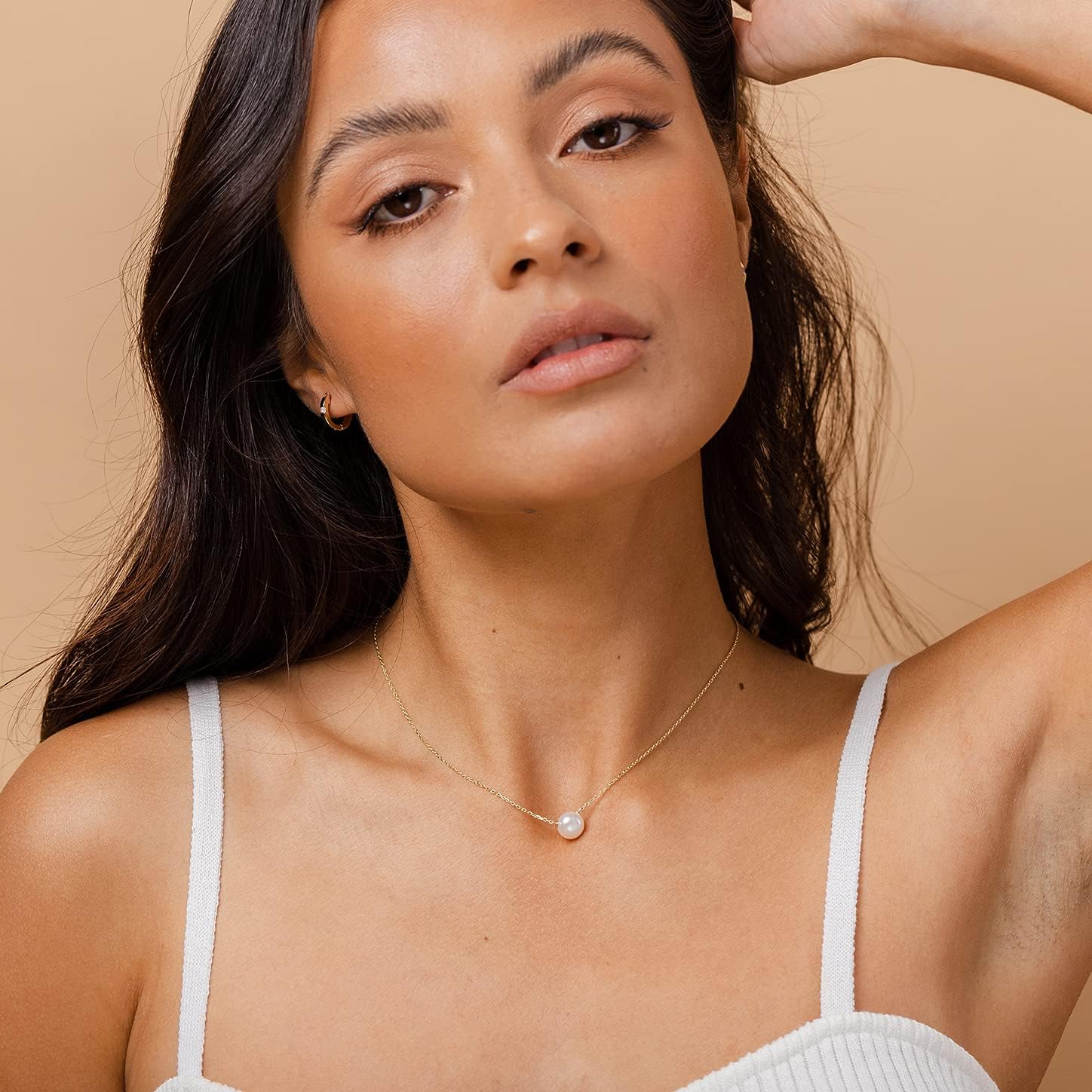
A freshwater pearl pendant necklace — a single pearl set in a small metal bail, hung on a chain — is one of the most practical pieces of fine jewelry a person can own. It reads dressed-up or casual depending on how you style it, and freshwater pearls (cultured in freshwater lakes and rivers, primarily in China) are significantly more affordable than their saltwater counterparts without sacrificing good luster at the mid-tier. But “affordable” cuts both ways. A $60 pendant with gold-plated brass and a 7mm freshwater pearl is a different object than a $280 pendant set in 14k gold vermeil with an 8mm AAA-graded pearl — even if they photograph identically. If you’re going to wear this piece every day, that difference will announce itself within six to twelve months. This article is for buyers who already know the basics and want a clear framework: match the metal quality to your actual wear frequency, so you don’t spend money twice.
| EDITOR'S PICK[Angara Akoya Pearl Solitaire Pe…](https://www.amazon.com/dp/B0BQ98HPHW?tag=greenflower20-20) | Mid-tier[The Pearl Source Real Pearl Pen…](https://www.amazon.com/dp/B00LID4MJI?tag=greenflower20-20) | Budget pick[PAVOI Handpicked AAA+ Freshwate…](https://www.amazon.com/dp/B071D5KD47?tag=greenflower20-20) | |
|---|---|---|---|
| Metal Type | 14K Solid Gold/Platinum | 14K Gold Plated Sterling Silver | Yellow Gold |
| Pearl Type | Japanese Akoya | Cultured Freshwater | Cultured Freshwater |
| Pearl Grade | — | AAAA | AAA+ |
| Pearl Size | — | 9-9.5mm | — |
| Chain Included | ✓ | — | — |
| Price | $246.05 | $110.00 | $14.95 |
| See on Amazon → | See on Amazon → | See on Amazon → |
Why Metal Quality Is the Deciding Variable (Not Pearl Grade)
Here’s the counterintuitive part: for a daily-wear pendant, the metal holding the pearl matters more than the pearl’s surface grade. That isn’t a dismissal of pearl quality — luster, surface cleanliness, and nacre depth absolutely matter. But pearls are chemically resilient in ways that metal alloys under plating are not. A well-nucleated freshwater pearl with decent nacre will outlast its setting if the setting is low-grade.
The GIA’s pearl description and grading resources note that nacre integrity — the thickness and layering of the calcium carbonate coating — is the primary determinant of long-term luster. Freshwater pearls are typically solid nacre (no bead nucleus in most commercial-grade pieces), which makes them structurally robust for daily wear compared to Akoya pearls, which are bead-nucleated and can be more vulnerable to impact.
The setting, by contrast, is exposed to sweat, lotion, shower water, and friction every single day. The American Gem Society’s guidance on metal alloys and jewelry durability is direct: thin electroplated gold over base metals like brass or copper will begin to wear at contact points — the bail loop, the chain attachment, the back of the prong — within six to eighteen months of daily use, depending on skin chemistry and product exposure.
The practical frame: If you wear the pendant three or four times a year for special occasions, gold-plated brass is perfectly adequate. If you’re putting it on every morning with your work clothes and not taking it off until bed, you need a different metal tier.
The Metal Tier Breakdown for Daily Wear
Here’s the honest hierarchy, from lowest to highest durability at the price points relevant to freshwater pendant buyers:
Gold-plated brass or copper (under $80 retail) A thin electroplated layer of gold — typically 0.5 to 2.5 microns — over a base metal. The Gem Society’s overview of gold-filled vs. gold-plated construction puts the minimum plating for “gold plated” at 0.5 microns, which is minimal. Owners of gold-plated freshwater pendants consistently report visible wear at the bail within a year of daily use, with green skin marking (copper oxidation transfer) appearing within six to eighteen months. Fine for occasional wear. Not recommended for daily.
Gold-filled (labeled “14/20 GF” or “12/20 GF”) Gold-filled is mechanically bonded — not electroplated — with a layer of gold constituting at least 5% of the total metal weight by U.S. FTC standard. The Gem Society notes this is roughly 100 times thicker than standard gold plating. At $100–$200 for a freshwater pendant, gold-filled hits a meaningful durability step-up. Owners report multi-year daily wear without visible degradation under normal conditions. The tradeoff: the base metal is still brass, so if the gold layer is eventually breached (say, at a solder point), you’re looking at tarnish or green transfer.
Gold vermeil (sterling silver base, minimum 2.5 micron gold layer) Vermeil (pronounced “ver-may”) is legally defined in the U.S. as sterling silver with a minimum 2.5-micron gold coating. It’s a step up from plated brass because the base metal is silver — tarnish, not green oxidation, if wear-through occurs. Across retailer reviews at the $150–$350 freshwater pendant tier, vermeil is consistently cited as a comfortable daily-wear choice for buyers who want gold aesthetics without solid gold pricing. The Pearl Source blog’s care guides note that vermeil is particularly susceptible to chlorine and perfumes, which accelerate plating wear — context worth weighing if you’re a swimmer or heavy fragrance user.
Solid 14k or 10k gold This is the clear recommendation for committed daily wearers. No plating to wear through. The American Gem Society’s durability guidance is unambiguous: solid gold alloys — 14k (58.5% gold) or 10k (41.7% gold) — are the appropriate metal for heirloom-intent or heavy daily use. At the freshwater pendant tier, solid 14k settings appear starting around $200–$350 paired with a 6–8mm AA+ or AAA freshwater pearl, and up to $500+ for larger pearls or more complex bail designs. Pearl Paradise’s blog notes that their 14k-set freshwater pendants are specifically merchandised toward buyers who describe their wear habit as “never take it off” — an editorial signal that even specialist retailers frame metal tier as a wear-frequency question.
Sterling silver (without gold overlay) Worth a separate mention because it’s common and often misunderstood. Sterling silver is durable but tarnishes — sometimes quickly — from daily exposure to skin and air. The Pearl Source blog recommends sterling for buyers who are willing to do routine polishing (a few minutes with a silver cloth every few weeks). If that’s not your habit, sterling will dull. For pearl pendants specifically, reviewers note that tarnished silver can visually compete with pearl luster in an unflattering way. Sterling is a legitimate daily-wear choice; it just requires maintenance that gold alloys don’t.
Pearl Grade: What You Actually Need at the Daily-Wear Tier
Once you’ve matched metal to wear frequency, the pearl grade question becomes more tractable. Here’s the compressed version.
By the numbers — freshwater pendant pearl grades at mid-market retail (May 2026):
- AA (slight blemishes, good luster): 7–8mm freshwater round, ~$80–$180 in gold-filled or vermeil settings
- AA+ (minimal blemishes, strong luster): 7.5–8.5mm, ~$150–$280 in vermeil or 10k
- AAA (near-clean surface, high luster): 8–9mm, ~$220–$400+ in 14k
For daily wear, the GIA’s pearl grading guidance frames surface cleanliness and luster as distinct variables: a pearl can have high luster with moderate surface blemishes, or clean surface with middling luster. For a pendant specifically — as opposed to a strand where blemishes accumulate visually — a high-luster AA+ at a lower price point often outperforms a clean-surfaced AAA with average luster. Luster is what you see in motion; surface marks on a pendant are largely invisible unless someone is inspecting closely.
Pearl Paradise’s luster guide consistently makes this point: a sharp, bright reflection that moves across the pearl as you turn it — what the trade calls “orient” or “deep glow” — is the visual quality that makes a pearl look alive. A clean surface on a chalky pearl looks dull regardless of grade.
The practical rule for daily wear: Don’t over-invest in surface grade at the expense of luster. Buy the highest luster you can in your budget, ensure the nacre is described as “solid” or the pearl is marketed specifically as solid-nacre freshwater (not bead-nucleated), and put the remaining budget into the metal.
The Decision Framework
This is the if/then grid for where you likely are:
If you wear jewelry three or fewer times per week: Gold-plated settings at $60–$120 are defensible. An AA freshwater in a plated vermeil setting will look good for two to three years of light use. Buy on pearl quality first.
If you wear it daily but you’re style-experimental (this pendant might not be your pendant in eighteen months): Gold-filled at $120–$220 is the rational choice. Durable enough for daily use for several years; not so expensive that switching feels like a waste.
If this is an intentional daily driver — you’re buying it to be your piece for years: Budget for solid 14k. The $200–$350 entry point for a 7–8mm AAA freshwater in a 14k setting is real money, but across reported owner experiences at that tier, the pearl and setting hold without meaningful degradation for five-plus years of daily wear. The cost-per-day math over five years is under $0.20. Gold-plated at $80, replaced twice, costs more and delivers less.
If you’re buying for someone else and unsure of wear habits: Gold-filled is the defensible middle. It performs well under daily use, looks identical to gold-plated to the casual eye, and doesn’t require the recipient to guess at their own habits before receiving the gift.
One additional variable the Pearl Source blog flags specifically for pendant buyers: chain quality often degrades before the pendant does. A lobster-claw clasp on a thin plated chain is the failure point most owners report — not the pearl, not the bail. If you’re investing in a solid-gold pendant, pair it with a solid or gold-filled chain at minimum, not a plated one. The chain is in constant flex and contact; it deserves the same logic.
The Short Answer
Match metal to wear frequency. For daily wear, solid 14k is the correct call if your budget can reach $200–$350; gold-filled is the defensible fallback at $120–$220. Buy luster over surface grade in the pearl itself — a bright, clean-reflecting AA+ freshwater will hold its visual quality in daily wear better than a technically higher-graded pearl with flat luster. And don’t let a bargain pendant price tempt you into a bargain chain.
The pearl is the easy part. It will outlast every other component. Give it a setting worthy of that.