June 13, 2026 • Steve Dawson • 9 min reading time • Prices verified June 25, 2026
Freshwater Pearl Bracelets: What Separates a $110 Cultured Strand from an $8 Stretch Bracelet
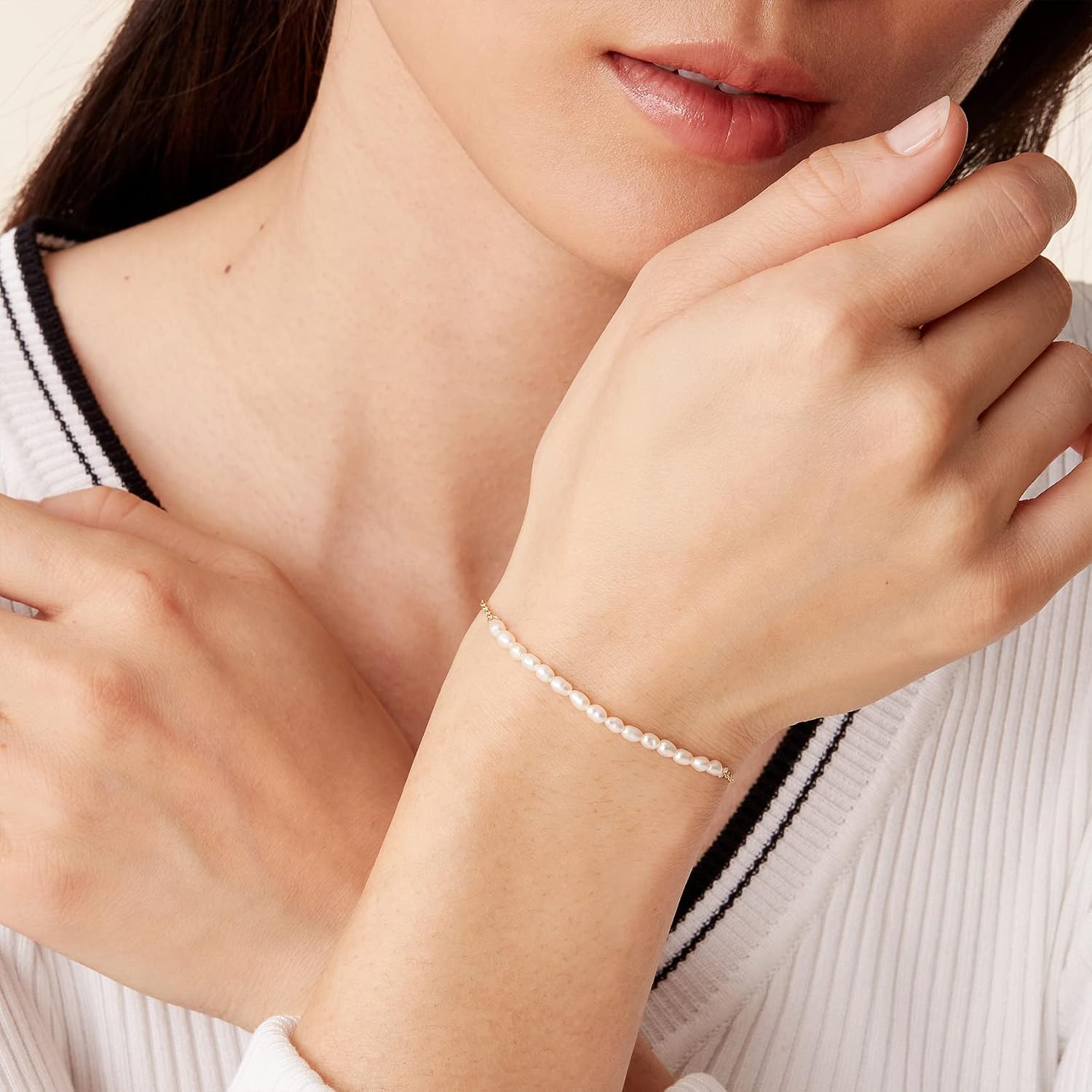
You’ve probably seen the gap before: a freshwater pearl bracelet on a fast-fashion site for $8, and what looks like a nearly identical strand at a specialty jeweler for $110 or more. Freshwater pearls — cultured pearls grown in freshwater mussels, primarily in China — now dominate the entry-level and mid-range market precisely because they can look very similar in a product photo regardless of actual quality. The differences that separate a bracelet you’ll still want to wear in five years from one that dulls or breaks within months aren’t always visible in a thumbnail. This article walks you through the five quality variables that actually matter, shows you where each price tier sits, and ends with a decision rule you can apply to whatever specific purchase is in front of you right now.
If you’ve already read a few buying guides and feel comfortable with terms like “luster” and “nacre thickness,” you’re in the right place. We’ll define the terms as we go but spend most of the space on the tradeoffs — the comparisons where the math starts to matter.
| EDITOR'S PICK[The Pearl Source White Freshwat…](https://www.amazon.com/dp/B007KAA3QE?tag=greenflower20-20) | Mid-tier[8-9mm Pink Freshwater Cultured…](https://www.amazon.com/dp/B00EFEUCJQ?tag=greenflower20-20) | Budget pick[White Cultured Freshwater Pearl…](https://www.amazon.com/dp/B0836C948B?tag=greenflower20-20) | |
|---|---|---|---|
| Pearl Size | 7.0-7.5mm | 8-9mm | — |
| Clasp Material | 14k Gold Plated | Sterling Silver | — |
| Quality Grade | — | AA+ | — |
| Length | — | 7" | 7" |
| Price | $110.50 | $100.00 | $16.95 |
| See on Amazon → | See on Amazon → | See on Amazon → |
The Five Variables That Actually Determine Price
Every price difference between a $8 stretch bracelet and a $110 cultured strand can be traced back to one or more of these five factors. Understanding them is how you stop paying for marketing and start paying for quality.
1. Nacre Thickness (and Whether There Is Any)
Nacre — pronounced “NAY-ker” — is the iridescent calcium carbonate that a mollusk secretes in layers around an irritant. It’s what creates the characteristic glow of a real pearl. On a genuine cultured freshwater pearl, the entire bead is nacre, because freshwater mussels are nucleated with a small piece of tissue rather than a shell bead. That’s a meaningful structural advantage over saltwater cultured pearls, which have a shell bead core with a relatively thin nacre coating.
The $8 bracelets flooding the market are frequently not pearls in any meaningful sense. They’re often plastic or resin beads with a pearlescent coating — a surface treatment that mimics the look of nacre but has no depth. Even when they are genuine freshwater pearls (and some are), they may be harvested early, with very thin nacre that will dull quickly as it wears through.
Per GIA’s Pearl Description and Grading reference, nacre thickness and surface quality are primary determinants of pearl value. The Gem Society’s Freshwater Pearl Quality Factors overview notes that a well-cultivated freshwater pearl with full nacre will show “orient” — a subtle rainbow iridescence beneath the surface luster — that thin-nacre or coated imitations simply cannot replicate.
The practical test if you have the piece in hand: Roll the pearl across your teeth. Genuine nacre feels very slightly gritty; coated beads feel glassy-smooth. It’s an imperfect test, but it’s reliable for eliminating obvious fakes.
2. Luster: The Single Biggest Visual Quality Signal
Luster is the sharpness and intensity of light reflected off the pearl’s surface. High luster means you can almost see a reflection of yourself in the pearl — the light bounces back cleanly. Low luster looks chalky, milky, or flat.
This is where the quality tiers become visible even in photos, if you know what to look for. The Pearl Source blog’s grading guide uses a five-tier scale ranging from “Excellent” (sharp, bright, mirror-like reflection) down to “Poor” (dull, diffuse, chalky). American Gem Society pearl buying guidance similarly frames luster as the dominant value driver in the consumer-accessible price range.
Here’s the calibration that matters for your bracket:
- $8–$20 range: Luster is typically Poor to Fair. The bead looks shiny in overhead retail lighting but flat in natural light. Surface often has a slightly waxy or plastic appearance.
- $30–$60 range: AA to AA+ freshwater, luster is Fair to Good. Reflections exist but are soft and indistinct. Surface quality varies. Acceptable for occasional-wear gift purchases.
- $80–$150 range: AAA freshwater, luster is Good to Excellent. Reflections are crisp. Surface blemishes are minimal. This is where the piece starts to hold up over time.
- $150–$300+ range: AAA high-grade or Edison/round freshwater pearls. Near-mirror luster. Shapes are more consistently round. Often comparable luster to entry Akoya strands.
Pearl Paradise’s blog has published detailed side-by-side luster comparisons across these tiers, and the visual difference between Poor and Excellent luster is not subtle once you’ve trained your eye on it.
3. Shape: Round Is Hard, and Harder Than It Looks
Freshwater pearls grow without a shell-bead nucleus, which means their shape is less controlled than Akoya or South Sea pearls. Perfectly round freshwater pearls are genuinely uncommon and command a premium. Most freshwater production yields near-round, oval, button, or baroque shapes.
For a bracelet, slight near-round shapes are often acceptable — they’re less visible in the curve of a strand than in a necklace laid flat. But shape affects how the bracelet sits on the wrist and how uniform it looks, and it’s one of the reasons a $30 strand looks “off” next to a $120 strand even when luster seems comparable in photos.
The decision frame here: If you’re buying for everyday wear or gifting, near-round AA+ is a sound value. If you’re buying for a piece that will be worn alongside a watch or other fine jewelry where alignment matters, pay the premium for AAA round.
4. Surface Quality: What “Lightly Spotted” Actually Means
Pearl surface grading refers to the number, size, and placement of blemishes — pits, ridges, spots, or dullness patches. Per GIA’s grading standards, surface quality is rated on a scale from Clean (no blemishes visible under 10x magnification) to Heavily Spotted.
In the $8–$30 range, surface quality is rarely a priority in sourcing. Buyers who review these bracelets consistently note visible pits and bumps even in casual wear. At the $80–$150 range, light spotting is normal and expected; a completely clean freshwater pearl at this price is either mislabeled or a genuine find. At $150 and above, you should be seeing lightly spotted at worst, with blemishes confined to areas hidden by drilling.
One detail that matters specifically for bracelets: blemishes near the drill hole accelerate wear and can cause splitting over time. On a stretch bracelet especially, the elastic repeatedly flexes through that drill point. Surface quality near the drill hole is something worth asking about explicitly when evaluating a supplier.
5. Stringing and Hardware: Where Budget Pieces Fail First
This is the variable least covered in quality guides, and it’s where the $8 bracelet typically fails first.
Stretch bracelets use elastic cord, and the quality range on that elastic is enormous. Budget bracelets often use silicone-coated elastic that stretches out within weeks of regular wear. Better-quality freshwater strands use double-strand silk or nylon with a secure clasp — typically a sterling silver or gold-filled lobster clasp.
By the numbers:
- Elastic stretch bracelets: 3–6 months average before restringing is needed under daily wear, based on buyer reviews across multiple jewelry retail platforms
- Knotted silk strand with quality clasp: 5–10 years before restringing, depending on wear frequency
- Restringing cost from a local jeweler: typically $20–$45 for a bracelet length
The math here is straightforward. Three $20 elastic bracelets over 18 months equals $60 and three rounds of frustration. One $80 knotted strand lasts years. The Pearl Source blog’s maintenance guidance explicitly notes that silk knotting — individual knots between each pearl — also protects pearls from rubbing against each other, which matters for surface quality over time.
How Grading Labels Map to Real Quality (and Where They Don’t)
The freshwater pearl market uses several overlapping grading systems that are not standardized across sellers. AAA/AA+/AA is the most common retail convention, but it is seller-defined — there is no universal third-party certification body for freshwater pearls the way GIA certifies diamonds.
The American Gem Society’s pearl buying guidance and GIA’s reference materials both acknowledge this: pearl grading terminology varies by origin and vendor. A “AAA” from a volume importer sourcing through a discount wholesale channel is not the same as “AAA” from a specialist retailer with transparent sourcing.
Practical implication: When a seller labels something AAA and prices it at $22, that label is doing marketing work, not grading work. Consistent AAA-quality freshwater pearls in a bracelet length (7 inches, typically 7–8mm pearls) should realistically cost $80–$150 from a reputable specialist retailer in the current market. Anything significantly below that warrants skepticism about the grading claim.
The Gem Society’s freshwater quality overview notes that the Edison pearl — a newer cultivation method producing large, round freshwater pearls with near-Akoya luster — represents a genuine step up in quality at prices still below comparable Akoya strands. Edison freshwater bracelets from established retailers currently run $150–$300, and the luster improvement over standard AAA freshwater is consistently noted by buyers who have compared both.
Making the Call: A Decision Rule by Use Case
You now have the variables. Here’s how to apply them to the decision in front of you.
If you’re buying a gift bracelet for someone who won’t maintain it and may not wear it daily: AA+ freshwater, near-round, stretch or simple knotted strand, $40–$80. The luster will be adequate, the shape won’t be distracting, and the price point is appropriate for the wear pattern. Don’t overspend here.
If you’re buying for a recipient who will wear it regularly alongside other fine jewelry: AAA freshwater, knotted silk, sterling or gold-filled clasp, $80–$150. The luster difference is visible in daily wear, the knotted strand will outlast elastic by years, and the hardware won’t corrode or discolor.
If you’re sourcing for resale, studio work, or a higher-end gift: AAA round or Edison freshwater, $150–$300. At this tier, you’re getting near-Akoya luster, consistent shape for matched strands, and a piece that holds up to comparison against saltwater options in the same display case.
If a listing is priced under $25 and labeled AAA: It’s almost certainly not. The nacre will be thin, the luster will be poor in natural light, and the stringing will fail first. The $8 bracelet is fine as a fashion accessory with that expectation built in. It is not a fine jewelry purchase and shouldn’t be evaluated as one.
The gap between $8 and $110 isn’t markup. It’s nacre, luster, shape consistency, surface quality, and hardware — five variables that are invisible in a thumbnail and obvious in hand. Know which tier you’re actually buying, and you’ll stop being surprised by what shows up at the door.