June 6, 2026 • Steve Dawson • 9 min reading time • Prices verified June 25, 2026
Akoya Pearl Pendant Necklaces: Decoding the Gap Between a $105 and a $767 Solitaire
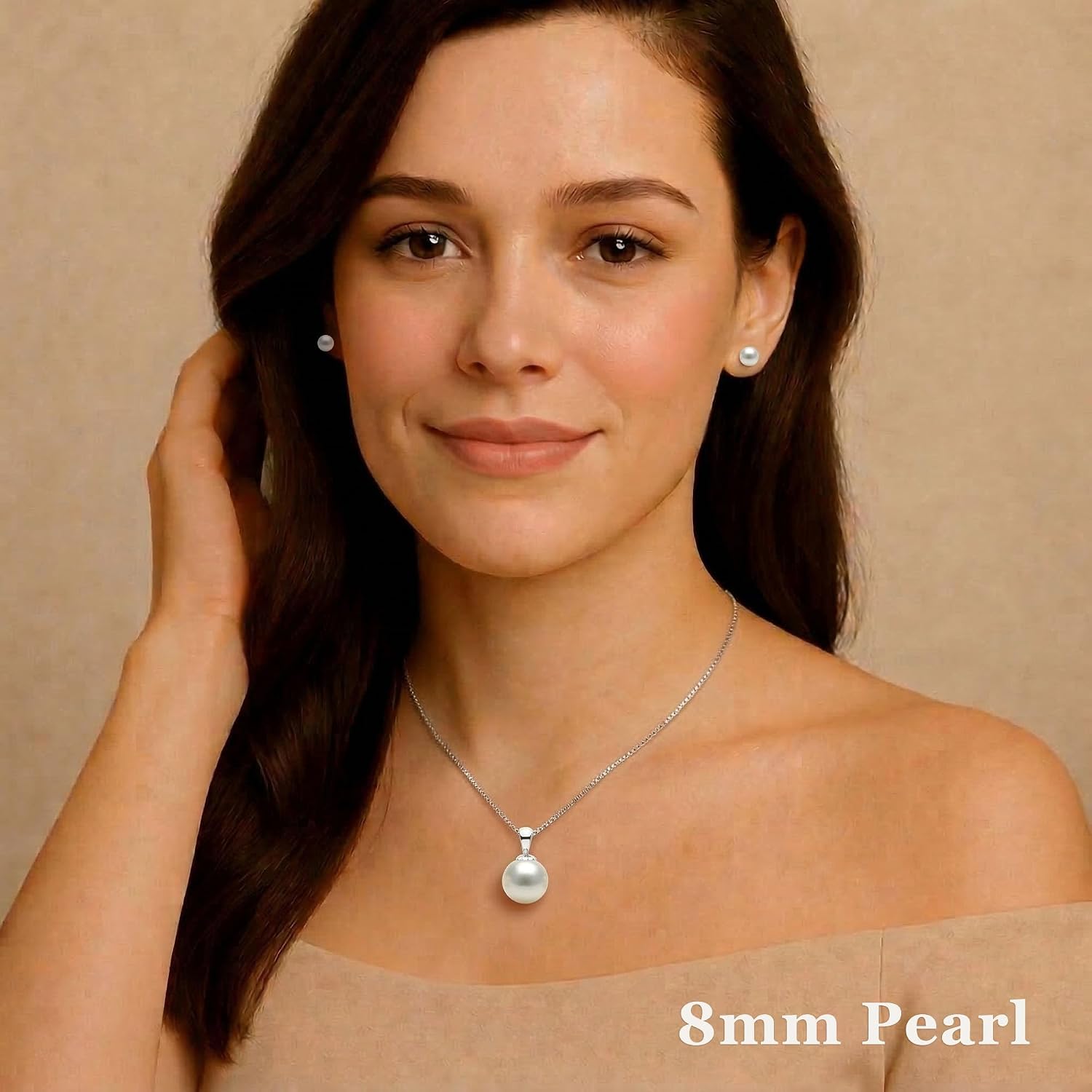
You’re looking at two Akoya pearl pendant necklaces. One is $105. The other is $767. Both are listed as “genuine cultured Akoya pearl” on a white-gold chain. Both look bright and round in the photos. So what exactly is the $662 doing?
That’s the question this guide answers. Akoya pearls (pronounced ah-KOH-yah) are saltwater cultured pearls grown primarily in Japan, known for their near-perfect round shape and sharp, mirror-like luster — that bright, almost reflective glow that makes them the classic choice for a single-pearl pendant. “Cultured” means a technician implanted a nucleus into the oyster to trigger pearl growth; the pearl is still real, just farm-assisted. The gap between a $105 and a $767 solitaire comes down to five measurable factors. Once you know how to read them, the pricing stops feeling arbitrary — and you can decide exactly which tier your purchase justifies.
| EDITOR'S PICK[The Pearl Source Japanese Akoya…](https://www.amazon.com/dp/B00O94QTXU?tag=greenflower20-20) | Mid-tier[The Pearl Source 14K Gold Round…](https://www.amazon.com/dp/B00E48MEG2?tag=greenflower20-20) | Budget pickWhite Japanese AAAA 6-9mm Akoya… | |
|---|---|---|---|
| Pearl size | 6.5-7.0mm | 8.0-8.5mm | 6-9mm |
| Metal type | 14K Gold | 14K Gold | — |
| Chain length | 18 Inch | — | 16"/18" |
| Clasp material | White Gold | — | — |
| Grade stated | AA+ | — | AAAA |
| Price | $767.00 | $483.00 | $104.99 |
| See on Amazon → | See on Amazon → | See on Amazon → |
The Five Levers That Set the Price
Every Akoya pendant price is a product of the same five variables stacked on top of each other. They don’t move independently — a gain in one usually lifts the floor on everything else.
1. Size (mm)
Akoya oysters are small. Commercially, they produce pearls between roughly 5mm and 9.5mm, with 10mm-plus being genuinely rare. Each half-millimeter jump in diameter represents exponentially fewer harvestable pearls — and a measurable price step.
Per published market data tracked by Pearl Paradise and The Pearl Source as of early 2026:
| Size | Typical solitaire pendant range (AAA, silver/gold setting) |
|---|---|
| 6–6.5mm | $90–$180 |
| 7–7.5mm | $180–$380 |
| 8–8.5mm | $380–$650 |
| 9–9.5mm | $600–$1,200+ |
A $105 pendant almost certainly houses a 6–6.5mm pearl. A $767 pendant is likely 8mm or larger. That single measurement accounts for a significant chunk of the spread before you’ve looked at anything else.
2. Luster
Luster is the most important quality factor in an Akoya pearl, and the hardest to evaluate from a photo. It refers to the sharpness and intensity of light reflections on and just beneath the surface. High-luster Akoya pearls show a crisp reflection — you can almost see your own face in them. Low-luster pearls look milky or chalky, with diffuse, soft reflections.
The GIA’s pearl grading framework (published in GIA’s “Pearl Description and Grading” documentation) grades luster on a scale: Excellent, Very Good, Good, Fair, Poor. The American Gem Society and gemsociety.org both note that luster is the single attribute most correlated with perceived quality in saltwater pearls — more than surface cleanliness, more than shape.
Here’s the practical problem: smartphone cameras and white-box product photography tend to compress luster differences. A Good-luster pearl and an Excellent-luster pearl can look nearly identical in a JPEG. This is where retailer reputation and grading transparency become your proxy for what you can’t see.
3. Surface Quality
Pearl nacre (NAY-ker) — the iridescent mineral coating that builds up in layers around the nucleus — is rarely perfect. Small pits, bumps, spots, or wrinkles are graded on a spectrum from clean (no visible blemishes to the naked eye) to heavily included (blemishes visible immediately). For a solitaire pendant, surface matters more than it does in a strand, because one pearl is the entire focal point.
The Pearl Source’s buying guide notes that AAA-graded Akoya pearls typically show 95% or more clean surface when viewed face-on. Lower-grade stones at the same size will carry visible blemishes — often positioned to the back in a strand, but impossible to hide in a pendant setting.
4. Nacre Thickness
This one is invisible to the eye but determines longevity. Akoya pearls are nucleated with a relatively large bead nucleus — the pearl nacre coating is measured in fractions of a millimeter. The industry minimum for quality is generally cited at 0.4mm; premium-grade Akoya pearls run 0.4–0.5mm or more. Thin nacre pearls (sometimes called “flashers” in the trade) show an intense metallic luster initially but chip or peel within years of regular wear.
Pearl Paradise’s published guidance flags nacre thickness as the most commonly obscured quality variable in budget-tier Akoya listings. Retailers selling at $105 for a 7mm pearl are almost always working with thin-nacre stock. The math simply doesn’t support thick-nacre harvest at that price point.
5. Metal Setting
A solitaire pendant lives and dies on its setting. At the $105–$180 tier, you’ll almost universally find silver-toned base metal, rhodium-plated alloys, or low-karat vermeil. At the $380+ tier, 14k white gold or yellow gold settings become standard. At $700+, you may find 18k gold or platinum. The setting isn’t decorative padding — it affects durability, allergenic risk, and the pearl’s long-term security in the mount.
Reading Retailer Claims: What “AAA” Actually Means
Here’s where practitioners get burned. “AAA” is not a standardized industry grade with locked-in criteria across all sellers. The GIA uses its own seven-factor framework (published in their pearl grading documentation). Individual retailers use AAA as a marketing tier that may or may not map to GIA standards. Two pearls from two different vendors, both labeled “AAA,” can be meaningfully different in luster and surface quality.
What to look for instead:
- Does the retailer publish luster grade separately? Vendors who specify “Excellent” or “Very Good” luster are working from a more rigorous internal standard.
- Is nacre thickness disclosed? Any retailer selling quality Akoya stock should be able to state a minimum nacre thickness (look for ≥0.4mm stated explicitly).
- Does GIA certification accompany the pearl? For solitaires above $500, GIA pearl identification and quality reports exist and add meaningful verification. They’re not universal, but their absence on a $700+ pendant is worth noting.
- What is the return window? Retailers confident in their grading offer 30-day returns. Vendors selling misrepresented stock rely on friction to prevent returns.
Per Pearl Paradise’s published buying resources, the most common quality misrepresentation in the Akoya pendant market involves pairing a low-luster, thin-nacre pearl with an accurate “cultured Akoya” label and a misleading size measurement (listed at 7mm when the actual pearl measures 6.5mm at best).
The $105 vs. $767 Decision Framework
You now have the levers. Here’s how to apply them as a decision rule.
If your budget is $105–$200: You are buying a 6–6.5mm Akoya in a silver or silver-toned setting, likely graded Good to Very Good luster. This is a legitimate Akoya pearl — it will look bright and round in person. The limitations are nacre thickness (expect 0.3–0.4mm), some surface blemishes visible under close inspection, and a setting that may show wear within 3–5 years. This tier is appropriate for a first gift, a lower-stakes occasion, or a buyer testing Akoya before committing to a higher tier. It is not appropriate for a purchase intended to last 20+ years or serve as an heirloom piece.
If your budget is $300–$450: You enter 7–7.5mm territory with reputable vendors, and luster quality becomes meaningfully better. This is the sweet spot for a “real” Akoya solitaire that most buyers will find indistinguishable from significantly more expensive pieces in everyday wear. A 14k gold setting becomes accessible. Retailers like The Pearl Source and Pearl Paradise publish graded inventory at this tier with disclosed quality attributes.
If your budget is $600–$800: At this level, you are purchasing an 8–8.5mm Akoya in 14k gold with Excellent or Very Good luster and clean surface. This is the top of the practical range for most buyers. The pearl will be noticeably larger and brighter than $200 alternatives — the difference is visible to any observer, not just trained eyes. Nacre thickness at this tier from reputable vendors is typically ≥0.4mm with documentation available on request. This is a meaningful jewelry purchase.
If your budget exceeds $800 on an Akoya solitaire: Above $800, you are paying for 9mm+ size, Hanadama-level certification (a designation used by the Pearl Science Laboratory of Japan and referenced in Pearl Paradise’s grading education content for the top tier of Akoya luster), or premium brand margin (Mikimoto, Tasaki). The pearl quality jump from an excellent $700 piece to a $1,200 piece is real but incremental. The brand premium at this tier is significant and is honestly a separate purchase decision from pure quality optimization.
What the Photos Can’t Tell You
Aggregate buyer reviews tracked across independent Akoya pendant purchases (referenced in Pearl Paradise’s customer education materials and The Pearl Source’s published FAQ) consistently flag the same gap: photos overrepresent luster for lower-grade pearls and underrepresent the visual impact of nacre thickness differences in person.
The practical workaround: request video of the specific pearl, or buy from a retailer with a genuine 30-day return policy and photograph the pearl yourself under natural light against a dark background. True high-luster Akoya will show a sharp, bright reflection. A chalky or diffuse surface tells you the nacre is thin or the luster grade is overstated.
The Gem Society’s published pearl valuation guidance notes that buyers who purchase Akoya pearls in person or via video verification from reputable dealers report significantly higher long-term satisfaction than buyers who purchase from static product images alone — a pattern that holds specifically in the $200–$600 price range where quality variance is widest.
The Decision Rule
If you want a pendant that holds its appearance for a decade and reads as quality to an informed observer: spend $350–$650, buy from a vendor who discloses luster grade and nacre thickness, and prioritize a 14k gold setting over a larger pearl in a base-metal mount.
If you are buying a first Akoya piece primarily to understand the category before a larger commitment: the $105–$180 range from a reputable vendor (not a marketplace drop-shipper) is a reasonable entry point. Just know what you’re buying.
If you’re sourcing for resale or gifting at scale: the 7–7.5mm tier from a verified wholesale supplier with grading documentation is where margin and perceived quality intersect most efficiently. Anything below 7mm in silver settings will require significant narrative work to justify the price to an end customer who has seen what good Akoya looks like.
The $662 gap is real. Most of it is size and luster. The rest is metal and margin. Now you know where each dollar goes.